Skip to content
Tutorial

How to Choose Crochet Stitches for Kitchen Towels

Compare Lemon Peel, Sedge, and Waffle Stitch for kitchen towels using existing Essie Crochets patterns and authentic project photos.

Compare Lemon Peel, Sedge, and Waffle Stitch for kitchen towels and dishcloths, with real Essie Crochets examples and a simple swatch check.

Think about what you want the towel to do. For an everyday hand towel, start with a fabric that folds the way you like. For a dishcloth, you might want more texture under your fingers. The stitch matters, and the yarn and number of strands can make two pieces feel very different.

Lemon Peel Stitch for an even, pebbled texture

Lemon Peel alternates single crochet and double crochet. The taller stitch sits next to a shorter one, which gives the fabric small bumps without a pronounced grid. It’s a good choice if you already know those two stitches and want a rhythm you can settle into.

The Coastal Calm Towel uses two strands of cotton held together and adds a hanging loop in one corner. Follow that pattern’s row starts, since the first stitch changes between its two rows.
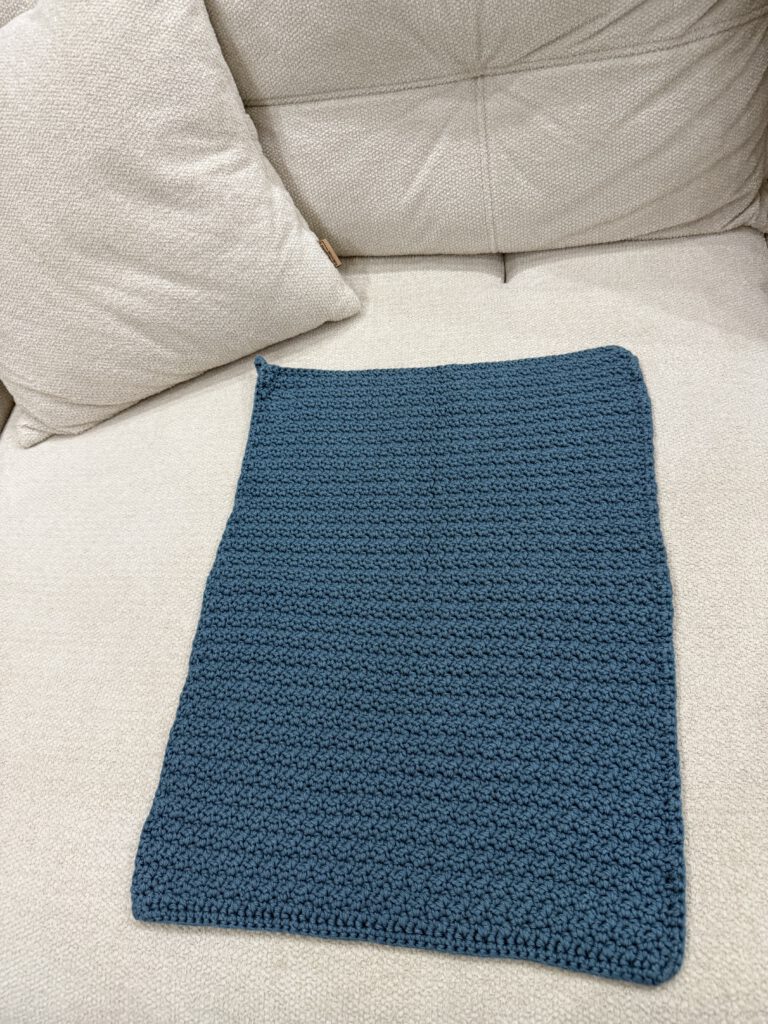
Blue Coastal Calm crochet towel laid flat on a cream sofa.
Coastal Calm uses Lemon Peel Stitch with two strands of cotton held together.

Sedge Stitch for a raised cluster texture

In Sedge Stitch, a single crochet, half double crochet, and double crochet share one stitch below. The group makes a more pronounced bump. Choose it if you like the look of little clusters and want to practice working several stitches into one place.

The Sienna Kitchen Towel uses one strand of cotton. It has a half double crochet row at the top to balance the foundation edge, then a single crochet border. It’s a useful example if you want a textured towel without starting with yarn held double.
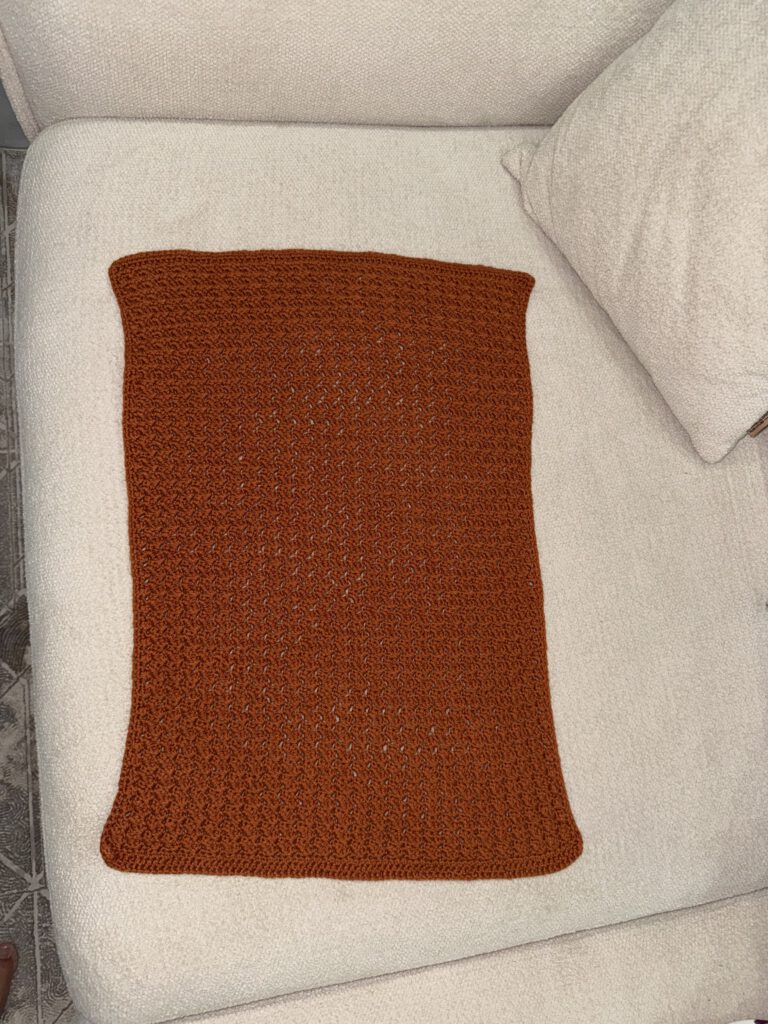
Rust-colored Sienna crochet towel laid flat on a light chair.
Sienna uses Sedge Stitch with one strand of cotton.

Waffle Stitch when you want a more pronounced grid

Waffle Stitch combines regular double crochet with stitches worked around a post, the upright part of a stitch below. Those raised lines give the fabric its waffle look. The Sunday Waffles Dishcloth uses two strands of cotton for a thick cloth. If you’re curious about waffle texture for a full towel, make a small sample first and see whether you like the bulk when it folds.
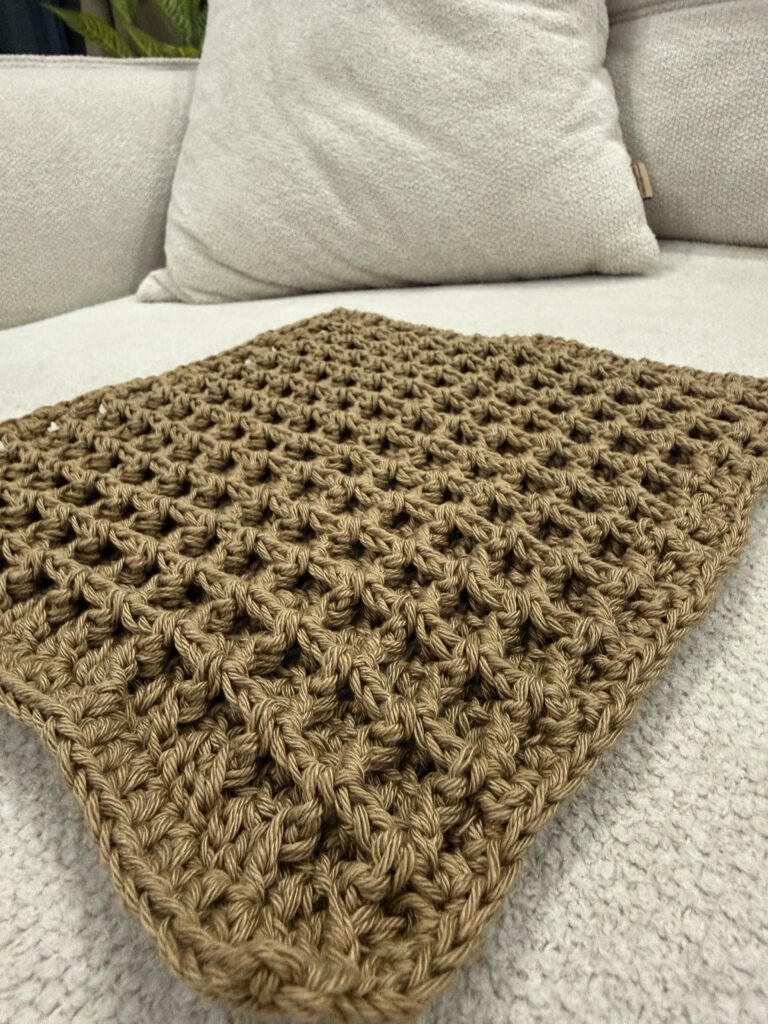
Tan Sunday Waffles crochet dishcloth with a raised grid.
Sunday Waffles is a dishcloth with a raised waffle grid.

Make a small sample before choosing

  1. Use the yarn and number of strands you plan to use for the towel. For a comparison of the stitches themselves, keep those choices the same across samples.
  2. Work enough of the repeat to see the texture away from the edges. Fold it and hold it the way you’d use a towel. Check whether the fabric feels open, firm, or bulky to you.
  3. Wash and dry the sample according to the yarn label. If the size matters, measure after drying. If you change the starting count in a pattern, keep its stitch repeat and the stitches needed at either edge.

If you want the easiest one to memorize, pick the stitch sequence you can see clearly in the fabric. When choosing between the finished examples here, remember that the Coastal Calm and Sunday Waffles samples use two strands while Sienna uses one. The photos show the designs, and a sample with your own yarn will tell you how your towel feels.

Choose a project from the skills you want to practise

Use the written pattern’s complete instructions. This table compares the skills involved, not measured absorbency, drying time or a universal difficulty ranking.

ProjectSkills to check before starting
Coastal Calm TowelSingle and double crochet, alternating row starts and the pattern’s hanging-loop instructions. Follow its own Lemon Peel sequence.
Sienna Kitchen TowelSingle, half double and double crochet; several stitches in one place; finding the next group’s target; top row and border.
Sunday Waffles DishclothDouble crochet and front post placement; distinguishing the textured rows; keeping the specified repeat and edges. This project is a dishcloth.

If working around a post is new, visit the Waffle Stitch video tutorial before choosing that project. If you prefer working into the tops of stitches, compare the other two complete patterns and practise their row sequences first. A familiar stitch does not remove the need to check the border or finishing.

Read the towel-yarn guide before substituting yarn or changing strand count. Use the towel-care guide to plan the yarn’s actual washing and drying routine.

Learn crochet, one skill at a time

New to crochet? Begin with the first path. Already making stitches? Choose the skill you need today. These written lessons use US crochet terms. Follow a path in order, or open its lesson list to choose your next step.

1. Make your first stitches

Start here if you are new. Make a chain and a small swatch, then learn to read its stitches and edges.

Start this path
See all 8 lessons
  1. How to Hold Your Crochet Hook and YarnFind a comfortable grip and let the yarn feed smoothly.
  2. How to Make a Slip Knot and Crochet a Foundation ChainMake and count a starting chain you can work into.
  3. How to Crochet Your First Single Crochet SwatchMake a small swatch and practise single crochet, turning, and counting stitches.
  4. How to Half Double Crochet: Your First RowsPractise 10 half double crochet stitches across each row.
  5. How to Double Crochet: Your First RowsLearn double crochet with a counted chain-three edge.
  6. How to Count Crochet Stitches and RowsRecognize stitch tops and count completed rows.
  7. Crochet Turning Chains: When Do They Count as a Stitch?Know when a turning chain replaces a stitch.
  8. How to Keep Your Crochet Edges StraightFind your edge stitches and work out why a row is growing or shrinking.

2. Explore loops, shaping and rounds

Once the basic stitches feel familiar, change the insertion point, shape a row and practise joining rounds.

Start this path
See all 6 lessons
  1. Front Loop and Back Loop Crochet: Where to Insert Your HookChoose the near or far strand without adding a stitch.
  2. How to Find and Crochet into the Third Loop of HDCFind the extra HDC bar in turned rows and unturned rounds.
  3. Right Side and Wrong Side in Crochet: How to Keep TrackKeep track of the face your pattern calls the right side.
  4. How to Increase and Decrease in Single CrochetSee how two-in-one and sc2tog change the count.
  5. Crochet Rows, Joined Rounds, and Spirals: What Changes?Understand what changes when you turn, join or work a spiral.
  6. How to Join Crochet Rounds with a Slip StitchPractise a 12-stitch tube and recognize its round boundary.

3. Fix and finish your crochet

Learn how to undo a mistake, change color, secure the tails, sew a seam and care for the finished fabric.

Start this path
See all 5 lessons
  1. How to Fix Crochet Mistakes Without Losing Your PlaceUndo the mistaken stitch and recover a complete live loop.
  2. How to Change Yarn Colors in CrochetChange the working strand on the final pull-through.
  3. How to Fasten Off Crochet and Weave in the EndsClose the live loop and practise a relaxed weaving route.
  4. How to Join Crochet Pieces with a Simple Sewn SeamMatch two top edges and follow a both-loop whipstitch.
  5. How to Block Crochet Without Stretching It Out of ShapeCare for and shape a sample without forcing its size.

4. Choose supplies and plan a project

Read yarn labels and patterns, measure gauge and plan size and yarn needs. Visit the first two lessons here before buying supplies.

Start this path
See all 10 lessons
  1. How to Read a Yarn Label and Understand Yarn WeightSeparate yarn thickness from ball weight and yardage.
  2. How to Choose a Crochet Hook SizeChoose a starting hook and adjust it using gauge.
  3. How to Read a Crochet PatternUnderstand US abbreviations, repeats, stitch counts, and row instructions.
  4. How to Measure Crochet GaugeCount stitches and rows to understand how your fabric affects project size.
  5. How to Substitute Yarn in a Crochet PatternCompare fiber, fabric, care and the length you need.
  6. How to Estimate Yarn for a Crochet ProjectEstimate a rectangle’s yarn use from a measured sample.
  7. How to Make a Flat Crochet Project Wider or NarrowerUse gauge and stitch repeats to plan a simple rectangle.
  8. How to Choose a Crochet Pattern Size and Plan Simple ChangesCompare body measurements, finished size and ease.
  9. How to Choose a Crochet Stitch for Your ProjectChoose fabric for coverage, flexibility and construction.
  10. How to Choose Crochet Stitches for Kitchen TowelsCompare textures before choosing a towel pattern to try.

Prefer browsing? Explore the stitch library or all tutorials.