Compare Lemon Peel, Sedge, and Waffle Stitch for kitchen towels and dishcloths, with real Essie Crochets examples and a simple swatch check.
Think about what you want the towel to do. For an everyday hand towel, start with a fabric that folds the way you like. For a dishcloth, you might want more texture under your fingers. The stitch matters, and the yarn and number of strands can make two pieces feel very different.
Lemon Peel Stitch for an even, pebbled texture
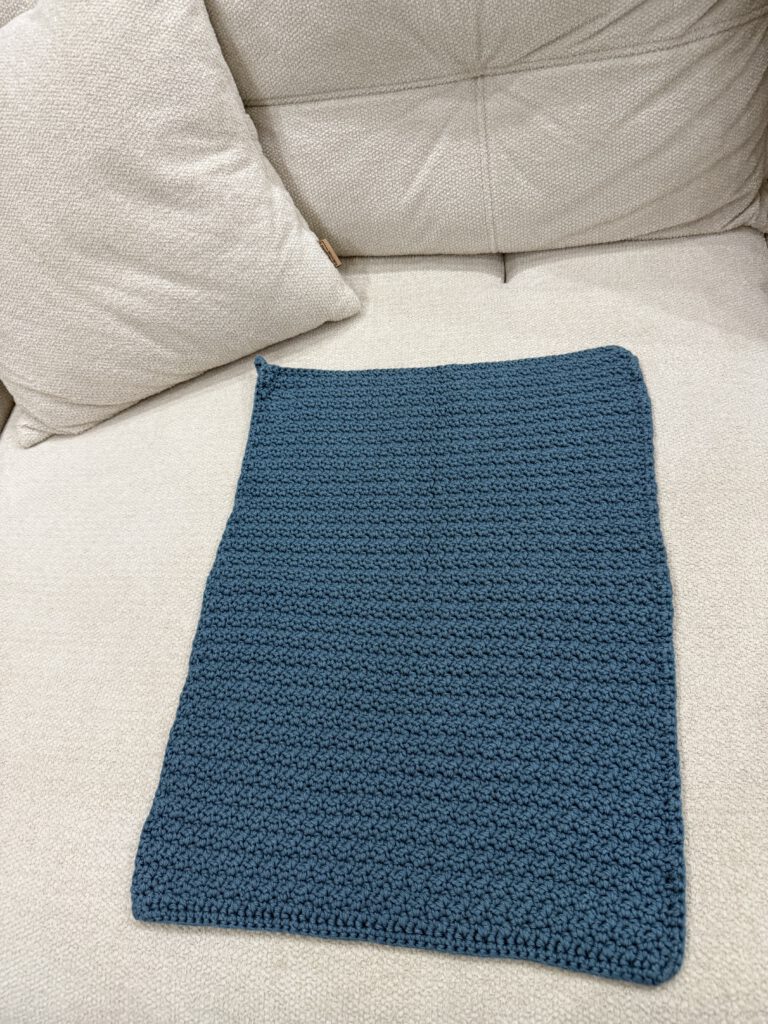
Lemon Peel alternates single crochet and double crochet. The taller stitch sits next to a shorter one, which gives the fabric small bumps without a pronounced grid. It’s a good choice if you already know those two stitches and want a rhythm you can settle into.
The Coastal Calm Towel uses two strands of cotton held together and adds a hanging loop in one corner. Follow that pattern’s row starts, since the first stitch changes between its two rows.
Sedge Stitch for a raised cluster texture
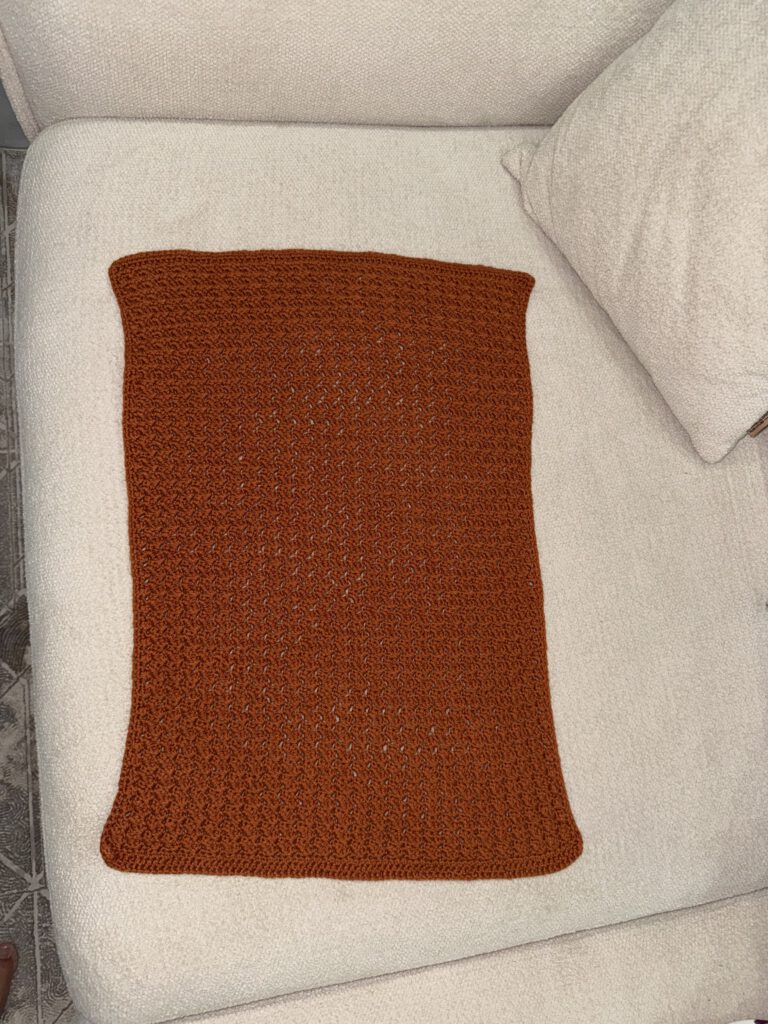
In Sedge Stitch, a single crochet, half double crochet, and double crochet share one stitch below. The group makes a more pronounced bump. Choose it if you like the look of little clusters and want to practice working several stitches into one place.
The Sienna Kitchen Towel uses one strand of cotton. It has a half double crochet row at the top to balance the foundation edge, then a single crochet border. It’s a useful example if you want a textured towel without starting with yarn held double.
Waffle Stitch when you want a more pronounced grid
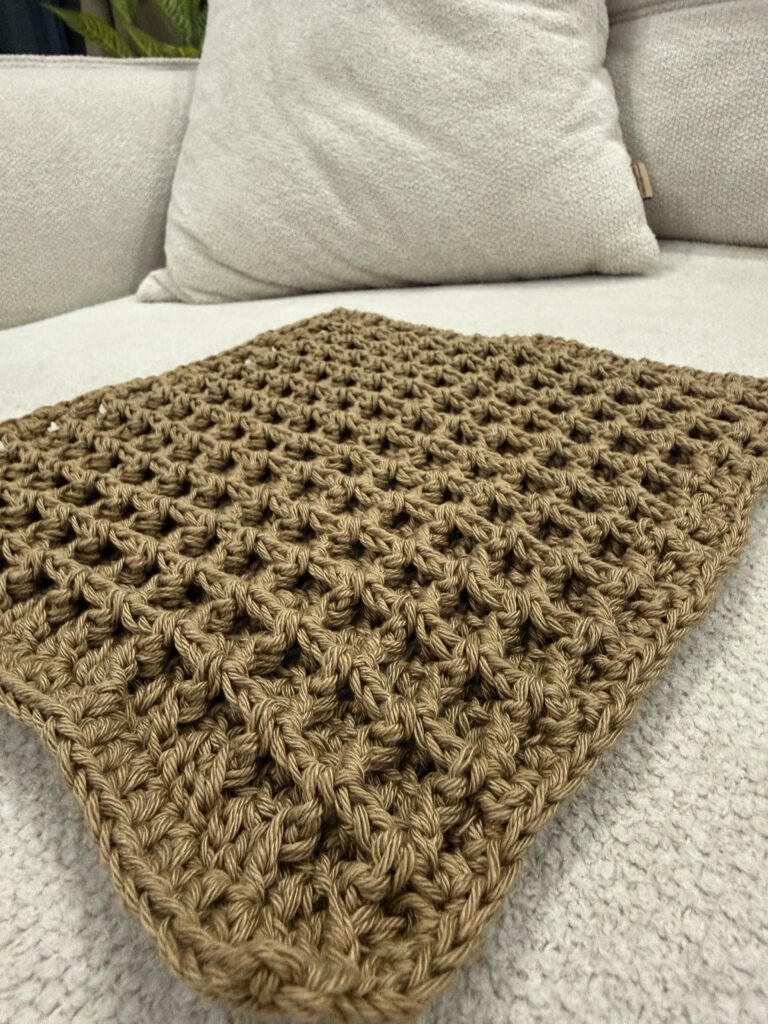
Waffle Stitch combines regular double crochet with stitches worked around a post, the upright part of a stitch below. Those raised lines give the fabric its waffle look. The Sunday Waffles Dishcloth uses two strands of cotton for a thick cloth. If you’re curious about waffle texture for a full towel, make a small sample first and see whether you like the bulk when it folds.
Make a small sample before choosing
- Use the yarn and number of strands you plan to use for the towel. For a comparison of the stitches themselves, keep those choices the same across samples.
- Work enough of the repeat to see the texture away from the edges. Fold it and hold it the way you’d use a towel. Check whether the fabric feels open, firm, or bulky to you.
- Wash and dry the sample according to the yarn label. If the size matters, measure after drying. If you change the starting count in a pattern, keep its stitch repeat and the stitches needed at either edge.
If you want the easiest one to memorize, pick the stitch sequence you can see clearly in the fabric. When choosing between the finished examples here, remember that the Coastal Calm and Sunday Waffles samples use two strands while Sienna uses one. The photos show the designs, and a sample with your own yarn will tell you how your towel feels.
Choose a project from the skills you want to practise
Use the written pattern’s complete instructions. This table compares the skills involved, not measured absorbency, drying time or a universal difficulty ranking.
| Project | Skills to check before starting |
|---|---|
| Coastal Calm Towel | Single and double crochet, alternating row starts and the pattern’s hanging-loop instructions. Follow its own Lemon Peel sequence. |
| Sienna Kitchen Towel | Single, half double and double crochet; several stitches in one place; finding the next group’s target; top row and border. |
| Sunday Waffles Dishcloth | Double crochet and front post placement; distinguishing the textured rows; keeping the specified repeat and edges. This project is a dishcloth. |
If working around a post is new, visit the Waffle Stitch video tutorial before choosing that project. If you prefer working into the tops of stitches, compare the other two complete patterns and practise their row sequences first. A familiar stitch does not remove the need to check the border or finishing.
Read the towel-yarn guide before substituting yarn or changing strand count. Use the towel-care guide to plan the yarn’s actual washing and drying routine.